

How to Cold Stratify Seeds: A Step-by-Step Guide for Better Germination
Starting seedsIf your seeds aren't sprouting, they may need cold stratification.
Also called cold stratifying and seed stratification, cold stratification is a process of exposing seeds to cold temperatures in order to stimulate germination. This is a natural process that seeds go through in the winter.
They need a cold period to signal it's time to start growing. That is why some seeds are planted in the fall.
But you don't have to plant in the fall or garden in an area that has cold winters. You can still mimic nature. Here’s exactly how to cold stratify seeds step by step indoors.

Table of contents
How to Cold Stratify Seeds (Step by Step)
This refrigerator method of cold stratifying seeds lets you easily mimic nature any time of year.
- Start by soaking the seeds for 12 to 24 hours.
- Then take a paper towel and throughly spray it with water.
- Sprinkle 1/2 of the paper towel with seeds.
- Then fold the paper towel over.
- Press the paper towel onto the seeds so that it makes contact to keep the seeds moist.
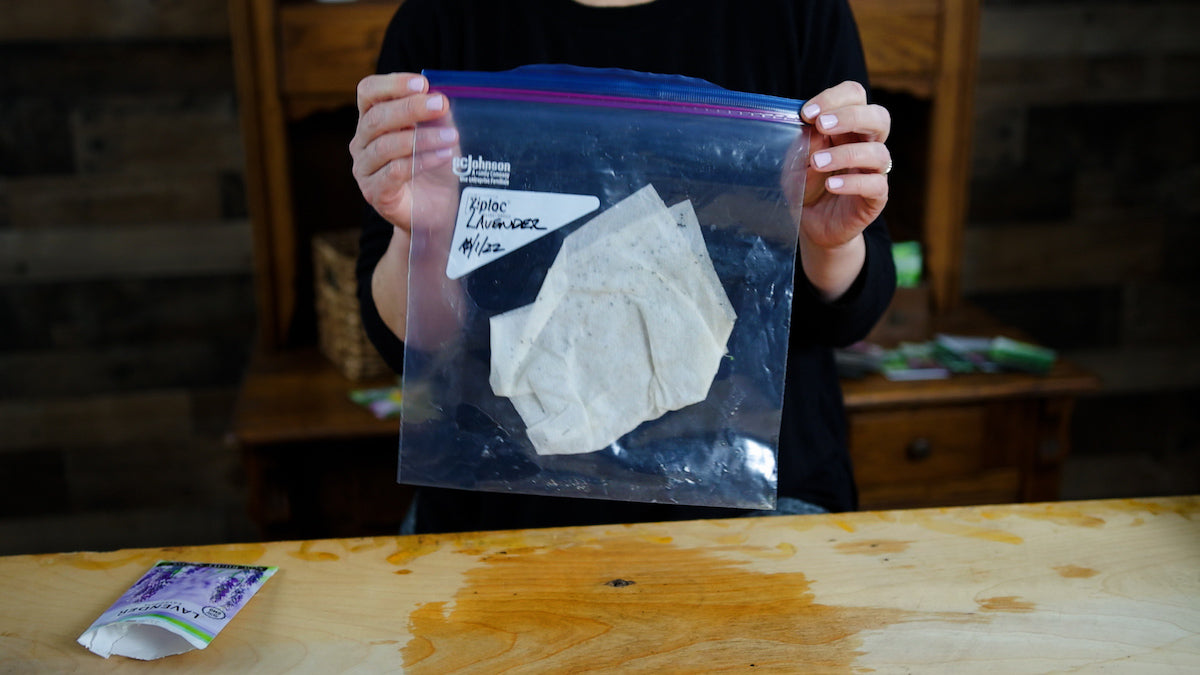
- Then place the paper towel in a plastic bag and zip it shut.
- Label the bag with the seed variety and date.
- Then place the bag in the fridge at 33-40ºF.
- Leave it in the fridge for 3 to 4 weeks.
After the cold period, the seeds are ready to plant. Seeds should be planted as soon as they are taken out of the fridge to prevent rotting or drying out.

Why do some seeds require cold stratification?
Many plants require a cold period to break their dormancy. This is especially true for perennial plants, which are adapted to survive the winter season. Before they can germinate, these types of seeds must experience a period of cold temperatures that mimic the onset of winter. The cold temperature lets the seed know that it's not time to grow
During this cold, moist period, the seed's hard outer shell is softened. Also, the cell walls and dormancy mechanism will be broken down, allowing the seeds to germinate successfully when the warmer temperatures arrive.
Seeds such as milkweed and lavender need this cold period before they will germinate. Without cold stratification, some seeds may remain dormant and never germinate. In other words, cold stratification gives your seeds a jump start on the growth process!
What are the benefits of cold stratifying seeds?
- Using cold stratification can significantly increase your seed germination rates.
- In our tests, we found almost a 100% germination rate for our lavender seeds when we used cold stratification before sowing indoors.
- Cold stratifying allows you to start seeds any time of year.
- You don't have to wait for winter to plant lavender, catnip, and other seeds that need a cold spell. Use the refrigerator to mimic nature.
Watch our video on how to cold stratify lavender seeds for maximum seed germination!
What are some seed varieties that require cold stratification?
Many seed varieties, such as conifers, perennial flowers, and shrubs, require cold stratification in order to break their dormancy. Additionally, some annuals, like morning glory and columbine, will benefit from cold stratification if they are planted in warm climates or during the summer months.
It is important to understand the specific requirements of the seed variety you are planting so that you can give it the best start possible. For example, some seeds may require a longer period of cold than others.
List of Seeds That Need Cold Stratification
Perennial Seeds to Cold Stratify:
Coneflower/Echinacea
Alpine Strawberries
Artichoke
Asparagus
Wild Iris
Yarrow
Annual Seeds to Cold Stratify:
Morning Glory
Pansies
Poppies
Verbena


Cold Stratification Methods
There are several methods for cold stratification. From the indoor refrigerator methods to outdoor winter sowing and fall planting. Choose the option that works for your situation and gives you the best success.
Refrigerator Method for Cold Stratification
As outlined above, the refrigerator method is a simple method that can be done any time throughout the year. Seeds are moistened and then placed in the fridge for 3 to 4 weeks.
In addition to the cold, moist method, you can also place seeds in the fridge without moisture. Seeds such as Snapdragons just need an overnight spell in the fridge to improve germination.
Supplies for cold stratification
The supplies needed for cold stratification are simple.
Refrigerator
Plastic zip-top bag
Spray bottle with water
Paper towel
Seeds
Outdoor Winter Sowing
Don't have access to a fridge? Or want to try something else?
Another way to naturally cold stratify seeds is to do winter sowing. This gets your seeds out in the cold weather so they get the cold period they need to germinate.
Winter sowing involves planting seeds in a container that stays outside. It is often called "milk jug sowing" because milk jugs make excellent winter sowing containers. You can learn more about winter sowing here.

Fall Planting
Nature will take care of cold stratifying your seeds if you plant them in the fall. This is an excellent way to plant wildflower seeds.
Many native plants, such as black-eyed Susan, yarrow, and coneflower, benefit from fall planting. These seeds will lie dormant in the cold winter months and then germinate as the soil warms up in spring.
(Need to get fast seed germination? Try these 5 tips to speed up your seeds.)
Common Mistakes with Cold Stratifying
Avoid these mistakes:
Don't cold stratify seeds that are warm-weather plants like tomatoes, peppers, and eggplants.
Don't let seeds dry out. Be ready to plant seeds after cold stratifying.
Not labeling. I always think I'm going to remember what it is. It even helps to put a reminder somewhere else so you remember there are seeds in the fridge.

Cold Stratification FAQs
What temperature is best for cold stratification?
The best temperature for cold stratifying seeds is between 33 and 40ºF.
Cold vs Cold Moist Stratification
Cold stratification can be as simple as placing a packet of seeds in the fridge for several weeks. Cold, moist stratification uses moisture to help break down the seed coat. The seeds are soaked and then placed in a cold environment, such as a fridge, for the required period of time.
Should I cold stratify in the fridge or the freezer?
A refrigerator is an ideal place to keep seeds for cold stratification. It keeps seeds below 40º since home refrigerators should be between 35º and 38º. In our germination tests with lavender, we had excellent results when we placed seeds in the refrigerator door for 4 weeks.
How can I cold stratify without a fridge or freezer?
Cold stratification can happen naturally in a cold environment. Winter sowing and fall planting let nature do the work.
How long do seeds need to stay cold?
Different seeds have different lengths of time that are optimal. Three to four weeks is the standard time for cold stratification.

Maximize Your Seed Germination Rates
Cold stratification is the secret to maximizing your seed germination rates.
This natural process can be replicated indoors any time of year.
Start with cold stratifying lavender seeds and see for yourself how it improves germination rates. If you grow catnip and milkweed, you'll appreciate the benefits of chilling your seeds first.
Starting seeds doesn't have to be frustrating. Knowing which seeds benefit from cold stratification will help you be a more successful gardener.
Happy Growing!


Thank you for your question, Phyllis. You are correct that there is a difference between cold stratification and cold moist stratification. The moist method uses a wet paper towel. For columbine and snapdragon seeds, we put the packet in the fridge without getting them wet.
Question. I’m new at this but would like know the difference between cold and cold moist stratification. One you wet paper towel and the other you don’t?
Leave a comment