

The Best Flowers to Plant with Vegetables (Most Gardeners Miss This)
TechniquesFlower companion planting is one of the easiest (and beautiful) ways to create a healthier, more productive vegetable garden.
By adding the right flowers alongside your vegetables and herbs, you can attract bees, butterflies, and other beneficial pollinators that help increase blooms and improve harvests. Even better, many companion flowers also deter harmful pests, making your garden more resilient naturally.
In this guide, we’ll share some of the best flowers to plant with vegetables so you can attract more pollinators, support garden biodiversity, and enjoy a thriving garden all season long.

When you hear about companion planting, what comes to mind? Do you think of the Three Sisters: Corn, Beans, and Squash? Or maybe you think of companion planting as a way to repel unwanted pests. It’s certainly true that pairing the right plants can discourage unwanted visitors to the garden.
Another great reason to consider companion planting is to draw beneficial pollinators like bees, birds, butterflies, bats, and ladybugs into the garden.
What better way to do this than with flowers?

Flower Companion Planting
Flower companion planting is a simple, natural way to boost the health and productivity of your vegetable garden. By pairing vegetables with the right flowers, you can attract pollinators, invite beneficial insects, and reduce pest pressure—all without synthetic chemicals.
Many flowers do more than just look pretty. They actively support your garden by drawing in bees and butterflies for better pollination, while also attracting predatory insects like ladybugs and lacewings that help control aphids, caterpillars, and other common pests. Some companion flowers even act as trap crops or release natural compounds that repel unwanted insects.
When planning your garden, think beyond rows of vegetables. Tucking flowers throughout your beds or along borders creates a diverse growing environment that strengthens plant health and improves yields. This approach to flower companion planting not only helps your vegetables thrive, but also creates a vibrant, pollinator-friendly space you’ll enjoy all season long.
In the sections below, we’ll highlight the best companion flowers for vegetables and how to use them effectively in your garden.

Companion Flowers for Vegetables
Marigolds
Certain flowers are overachievers in the garden. Marigolds are one of the most popular choices for flower companion planting, and for good reason. Their strong scent helps deter pests like aphids, whiteflies, and even nematodes in the soil. French marigolds, in particular, are known for their pest-repelling properties.
Marigolds pair well with many plants: tomatoes, cucumbers, melons, squash, lettuce, and onions. They will help your plants to get much-needed pollination and thrive.
When marigolds are tilled into the soil, they also do double duty as they decompose, releasing biochemicals that can discourage pests such as cucumber beetles, nematodes, squash bugs, and cabbage maggots.

Nasturtiums
Nasturtiums are an excellent flower partner to brassicas like cabbage and cauliflower, as well as squash, radishes, and tomatoes. They are beautifully deceptive, as they attract aphids and cabbage worms and help keep them off your vegetables. Plant nasturtiums where they can lure the pests away.
As a bonus, nasturtiums are also one of our favorite edible flowers.
Another reason to plant nasturtiums is to bring in the hummingbirds. The blossom shape is perfect for them to feed on. If you want some real fun in your garden, plant some nasturtiums and watch your head!

Calendula
Calendula will attract lacewings and tiny wasps that eat other garden pests. They're also beneficial to native bees, honeybees, and butterflies. Having more of these around means improved pollination of your vegetables, too.
In our garden, we planted calendula with our broccoli.
Calendula is also a beneficial flower for herbal remedies. Plant calendula in your vegetable patch and your medicinal garden.

Cosmos
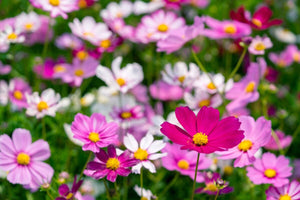
The scent of cosmos will attract butterflies and beneficial insects such as lacewings, and hoverflies to your garden while repelling corn earworms.

Sweet Alyssum
Sweet alyssum creates a beautiful carpet of flowers. This ground covering can help suppress weeds as well as attract hoverflies, lacewings, and parasitic wasps. These insects feed on the flower nectar, and their larvae eat aphids and thrips.
We plant sweet alyssum underneath our pepper plants, and they grow in perfect harmony.

Zinnias
Pollinators love zinnias! Butterflies, bees, and even hummingbirds are attracted to the bright colors and readily available nectar. Zinnias are incredibly easy to grow, and they bloom all summer.
Zinnias are especially fun to add to the vegetable garden because they come in a wide range of colors. They love sharing, and the more you cut, the more they grow new blooms. They're excellent companion flowers for summer gardens.

Sunflowers
Sunflowers are a fun choice because they can pair with climbing vegetables to provide support. In addition, their cheerful flowers bring all sorts of birds, butterflies, and bees to the garden. They pair well with cucumbers, in particular.

Aromatic Herbs
Don't forget flowering herbs. Herbs are great companion plants for attracting pollinators to the garden. Mints pair well with cabbage and tomatoes. Basil and oregano also do well with tomatoes. Dill attracts beneficial wasps (yes, they do exist) that help with cabbage pests, as well. Borage brings beneficial insects to strawberry plants. Letting herbs flower will help attract more pollinators.

Can flowers really help vegetables grow?
Yes! Flower companion planting can significantly improve how well your vegetables grow. The right flowers attract pollinators like bees and butterflies, which increases fruit set in crops like tomatoes, squash, and cucumbers. More pollination means more flowers turn into harvestable produce.
Flowers also bring in beneficial insects such as ladybugs, lacewings, and hoverflies. These predators naturally control pests like aphids, whiteflies, and caterpillars, reducing damage to your vegetable plants.
Some flowers go a step further by repelling pests with their scent or acting as trap crops. For example, marigolds can help deter soil pests, while nasturtiums draw aphids away from your vegetables. Altogether, flower companion planting creates a healthier garden ecosystem that supports stronger, more productive plants.
Companion planting is a fantastic method to get the most out of your garden. Introduce some variety by adding herbs and flowers to plant alongside your vegetables. Not only will they add some beauty and pleasant odors to the garden, but they’ll attract beneficial pollinators. They’ll also help to repel some pests and encourage better growth and productivity of your vegetables.
What a beautiful way to organize your garden!
Resources:
Oregon State: Practice the good neighbor policy in the garden: Try companion planting
Penn State: Companion Planting
UMass Amherst Companion Planting in the Vegetable Garden
University of Delaware: THE "NEW" COMPANION PLANTING: ADDING DIVERSITY TO THE GARDEN


Leave a comment