

Mammoth Sunflower Growing Guide: Tips for Huge Flowers and Healthy Plants
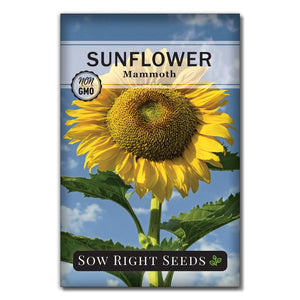
SunflowersThere are sunflowers, and then there are SUNFLOWERS! Mammoth sunflowers are the king of sunflowers and can grow 12 feet tall. These are the sunflowers to grow if you are looking to impress your kids, the neighbors, or even the squirrels.

How to Plant Mammoth Sunflower Seeds

Sowing Mammoth Sunflower Seeds Outdoors
Mammoth sunflower seeds are simple to sow directly into the ground outdoors.
Plant seeds 1” deep. Sunflower seeds don’t need light to germinate; this depth will keep them away from birds.
Put netting over the seeds until they are sprouted to keep birds and other animals from eating them.
Plant 2 to 3 seeds per spot in case one gets eaten. Once they have sprouted, thin out to keep the strongest plant.
Plant seeds 1 inch deep after all danger of frost has passed.
Keep soil moist but not soggy.
Sunflower seeds germinate in 7 to 14 days.
Mature sunflower plants prefer drier conditions.
How to Germinate Mammoth Sunflower Seeds Indoors
You can also start mammoth sunflower seeds indoors to get an earlier start on the season and to protect seeds and seedlings.
Once the sunflower seeds sprout, they must be planted outside in 2 to 3 weeks. Sunflowers have a long taproot that can quickly reach the bottom of the pot and then become stunted. Using biodegradable pots will make transplanting easier on the roots.

Caring for Mammoth Sunflower Plants
Sunflowers are one of the easiest flowers to grow. And the same holds true for Mammoth Sunflowers. However, because of their size, there are a few tips you’ll want to know to ensure an impressive harvest of sunflower seeds.
Full Sun
Mammoth sunflowers love the summer sunshine and need a location with full sun. Six hours of direct sunlight is the minimum. But for the biggest growth possible, try for 8 hours. Another thing to consider is that these giant sunflowers can easily shade out other plants. So take this into consideration when deciding where to plant sunflowers in your garden.
Warm Soil
Mammoth sunflowers don’t really need great soil, but they will grow better with plenty of nutrients. Start with nutrient-rich soil that is warm. The ideal soil temperature for sunflower seed germination is between 70º and 75ºF. A pH of 6.0 to 7.5 is optimal.
Keep weeds out so they aren’t competing with your flowers for water and nutrients. Sunflowers don’t usually need fertilizer. But if you want to give mammoth sunflowers even more of an edge, you can add extra compost and a slow-release fertilizer. Sunflowers have long taproots, so water deeply and not too often. Let the soil dry out between watering, which will encourage the taproot's deep growth.

Space for Sunflowers
As their name suggests, mammoth sunflowers are giant! They need plenty of room to grow and reach their full potential. They will have smaller heads if they are close together. When planting mammoth sunflower seeds, space them at least 18” apart. You can thin them even further to 36” apart. Mammoth sunflowers only have one flower per stalk, so there won’t be side branches.
Support
Mammoth sunflowers can get heavy and knocked down in a windstorm. But they do grow a very strong stalk that can support the big flower head. It’s just a matter of the wind hitting the sunflower plant at the right angle to knock them over and expose the roots. If this happens, sometimes you can prop the stalk up and get the roots back in the earth so the sunflower can continue growing. However, sometimes the upheaval has damaged the roots too much. You can use staking and support methods used in flower farms, such as row strings and fencing. Put in any supports before the roots get set since putting in something later could break the roots.

Seeds for Mammoth Sunflowers
Start by planting the right variety of seeds. Mammoth sunflowers can only grow as big as their genes. Then, save the seeds for eating! Mammoth sunflower seeds are the kind that you want to save. When Mammoth sunflowers are young, their flower heads will turn east in the morning and follow the sun across the sky. But as these giant sunflowers grow, their heads get heavier with seeds and eventually stop moving. When their flower heads droop down, it is a sign that the seeds are maturing.
Mammoth Sunflowers are an heirloom variety that originated in North America. They are prized for their enormous head that can grow up to 14 inches across. The stalks of these sunflowers can grow up to 12 feet tall and are as wide as a small sapling. The thick stems support the weight of the heavy head full of delicious sunflower seeds. If you want an amazing sunflower that towers over the garden and has a large harvest of seeds to eat, plant Mammoth Sunflower Seeds.
Harvesting Mammoth Sunflower Seeds for Eating
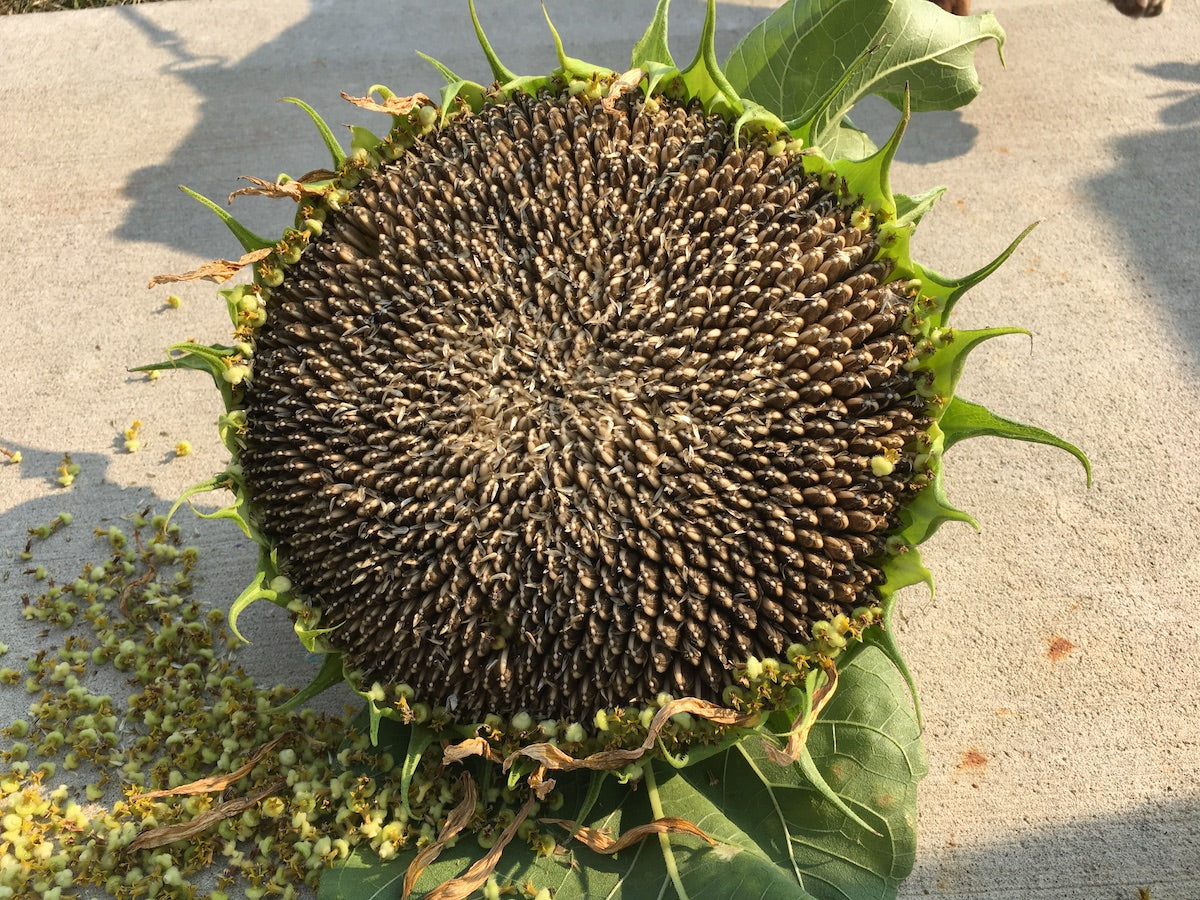
Harvesting sunflower seeds is one of the most rewarding parts of growing Mammoth sunflowers. The large flower heads can produce hundreds of edible seeds for roasting, snacking, bird feeding, or saving for next year's garden.
Protecting Developing Seeds
As sunflower seeds develop, they begin as soft white seeds. At this point, they are not mature, but birds and squirrels love to eat these tender seeds. If you want to harvest mature seeds, you may need to protect the flower heads while the seeds finish ripening.
To keep wildlife from eating your harvest:
- Cover flowers with a mesh cloth
- Use paper bags loosely tied around the heads
- Check coverings regularly for airflow and moisture buildup

How to Tell When Sunflower Seeds Are Ready to Harvest
- Petals will dry up and fall off.
- The flower head will droop and not follow the sun.
- The back of the flower head will start to yellow.
- Seeds will start to loosen.
- Mature seeds will be black and gray striped.
The seeds mature from the outer edge inward, so some seeds near the center may remain undeveloped.
How to Dry Sunflower Heads
It is best to leave the flower heads on the stalk as long as possible so the seeds can fully mature. However, if frost, rain, birds, or squirrels become a problem, you can harvest the heads early and finish drying them indoors.

Drying Sunflowers Indoors
To dry sunflower heads indoors:
- Cut the stalk about 12 inches below the flower head.
- Hang the heads upside down in a well-ventilated area.
- Keep them out of direct sunlight.
- Protect them from mice and birds.
Drying usually takes a couple of weeks.
Because Mammoth sunflower stalks become extremely thick, you may need heavy pruners, loppers, or a small pruning saw to cut them down.

How to Remove Sunflower Seeds
Once the seeds are fully dry, hold the seed head over a bowl or bucket and rub your hands across the seeds. (You may want to wear gloves)
If the seeds don't release easily, they need to dry longer.
Any undeveloped seeds can be shared with the birds. Just place the seedhead back outside and let the birds have a tasty snack.
Roasting Mammoth Sunflower Seeds
Mammoth sunflower seeds can be eaten raw or roasted.
Soaking them in salt water before roasting gives them a nice salty taste.
For salted roasted sunflower seeds:
- Soak seeds in salt water
- Roast the seeds for 10 minutes at 400ºF.
For unsalted seeds:
- Roast at 320ºF for 5 minutes if they haven't been soaked.
Watch carefully to avoid burning.

Saving Sunflower Seeds for Planting
If you are keeping seeds to plant for next year, let them completely dry before storing them.
Store seeds in:
- Paper envelopes
- Glass jars
- Keep in a cool, dry place
Do not roast seeds intended for planting.

Mammoth sunflowers are a fun flower to grow. You’ll be amazed at the height of these plants and the colossal flowerhead. Their size will make you feel like a garden gnome!
Try growing mammoth sunflowers and enjoy a massive harvest of delicious seeds to eat. You'll have plenty to share, even if the birds get a few.
Found this information helpful? Share it with your gardening friends!


Leave a comment