

Grow Some Sunshine! How to Plant Sunflower Seeds in a Variety of Colors
SunflowersSay "sunflower", and you automatically visualize school bus yellow petals surrounding a black center. However, sunflowers come in an amazing variety of colors, shapes, and sizes. From bright lemon yellow to dark chocolate cherry, learning how to grow sunflowers is the perfect way to bring vibrant color to your summer and fall garden.
We’ll explain the ins and outs of planting sunflower seeds and show you all the varieties you can enjoy.

Quick Links:
Growing Sunflowers From Seeds
Sunflowers are at the top of our list of easy flowers to grow from seed. We love that we can plant sunflower seeds directly in the garden all summer long. They are perfect for growing in a cutting garden, along a fence, wall, or just about any place where they can soak up the sun.
The scientific name Helianthus annuus comes from the Greek words “helios” for sun and “anthos” for flower. It’s not just that the flower reminds you of the sun with its shining rays, but the sunflower is heliotropic. This means that the flower head follows the movement of the sun.
When sunflowers are young, and their flower heads are still developing, they will turn their faces east in the morning and follow the sun across the sky until it disappears on the western horizon. As the heads grow and get heavier with seeds, they won’t move as much until eventually they stay pointed east. When the heads droop down, it is a sign that the seeds are maturing.

When and How to Plant Sunflower Seeds Outdoors
The easiest and most successful way to grow sunflowers is by sowing the seeds directly into the ground outdoors.
Quick Sunflower Planting Guide:
- Soil Temperature: Must be at least 50ºF, though 65ºF to 75ºF is ideal for rapid germination.
- Planting Depth: Sow seeds 1 inch deep.
- Sunflower Spacing: Space seeds 12 inches apart for small varieities, 24 inches for regular sizes, and 36 inches for giant varieties.
- Sprouting Time: Seeds typically germinate within 7 to 14 days.
Tips for Planting Sunflower Seeds in the Garden
Because birds and other critters love eating sunflower seeds, direct sowing comes with a few natural hazards. Use these tips to avoid seed loss.
- Plant 1 inch deep. Sunflower seeds don’t need light to germinate, and this depth will keep them away from birds.
- Use protective netting. Place a light netting or floating row cover over the soil until the seedlings sprout to keep birds and other animals from eating them.
- Over-seed and thin: Plant 2 to 3 seeds per spot in case one gets eaten. Once they have sprouted, thin out seedlings to keep only the strongest plant.

Sunflower Seed Germination Tips
Select a sunny location.
Prepare the soil with organic matter for nutrient-rich soil.
Plant seeds 1” deep after all danger of frost has passed.
Soil temperature must be at least 50º F. 65º to 75º is ideal.
Keep soil moist but not soggy.
Sunflower seeds germinate in 7 to 14 days.
Mature sunflower plants prefer drier conditions.

How to Germinate Sunflower Seeds Indoors
Sunflower seeds can also be planted indoors to get an earlier start on the season and to protect seeds and seedlings.
Sunflowers have a long taproot that can quickly reach the bottom of the pot and then become stunted. Once the sunflower seeds sprout, they will need to be planted outside in 2 to 3 weeks. To help avoid transplant shock, you can use biodegradable pots.
Sunflower Care and Growing Tips
To ensure your sunflowers reach their full height and blooming potential, keep these maintenance tips in mind:
- Sunlight Requirements: Sunflowers love the summer sunshine. They need a location with 6 to 8 hours of direct, unfiltered sunlight daily.
- Deep watering: Sunflowers have long taproots, so water deeply and not too often. Let the soil dry out between watering, which will encourage the taproot's deep growth.
- Soil & Fertilizer: Fertilizer is unnecessary when the soil is nutrient-rich and drains well. A pH of 6.0 to 7.5 is optimal.
- Succession Planting: You can succession plant by planting new seeds every 2 to 3 weeks.
- Sunflower Spacing: Spacing sunflowers is vital for achieving their full size potential. If you want large flower heads, space sunflowers further apart. 12” for small varieties, 24” for regular size, and 36” for giant sunflowers.
Another consideration for spacing is whether it is a branching variety or not. Some sunflowers only have one flower per plant, whereas others have one main flower head and multiple side flowers. Those with side flowers will need more room to grow. The spacing guidelines on the seed packets will give you the right recommendation.
When growing sunflowers for cut flower arrangements, you will want to plant them close together. This will result in smaller stalks that work better for arranging bouquets.
Keep weeds out, so they aren’t competing with your flowers for water and nutrients.
Tall sunflowers are striking but also at risk of being blown over by the wind. Using stakes, trellises, and planting along fences can help keep sunflowers upright when the wind blows.

Choosing Your Sunflower Varieties: Color and Size
From the fluffy teddy bear variety to the huge mammoth full of seeds, there’s a perfect variety of sunflower for every garden.
Sunflower colors can range from light lemon to dark chocolate.
Want sunflower seeds to eat? Plant the Mammoth sunflower. Mammoth sunflowers can grow up to 12 feet tall. Make sure you’re ready for the height! With 14” blooms, they can also get heavy.
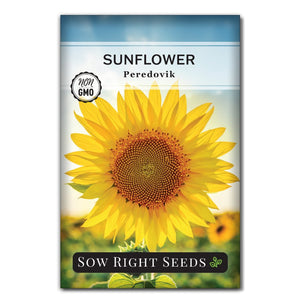
Are you interested in feeding the birds? Peredovik sunflowers are a favorite with birds and other animals. They have a softer shell, a strong taste, and a high amount of healthy sunflower oil.
Lemon Queen Sunflowers
Lemon Queen is a bright lemon yellow sunflower with 4-5" blooms. This multi-branched variety can reach 60-90" in height. Birds, bees, butterflies, and other pollinators love Lemon Queen Sunflowers!
Chocolate Cherry Sunflowers
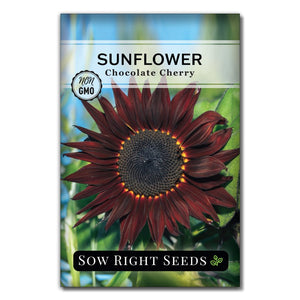
The deep mahogany or burgundy petals make the Chocolate Cherry Sunflower a popular fall flower. This heirloom sunflower variety produces 5-8" blooms on multiple branches. The long-lasting flowers have little pollen and make excellent cut flowers.
Mammoth Sunflowers (Best for Eating)
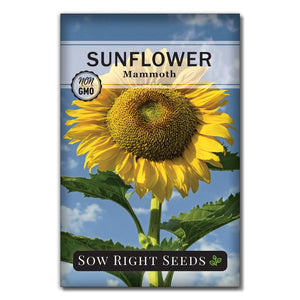
If you are growing sunflowers exclusively for edible seeds, plant Mammoth Sunflower Seeds. These massive plants can grow up to 12 feet tall and produce heavy, 14-inch flower heads packed with harvestable seeds.
Sungold Sunflower
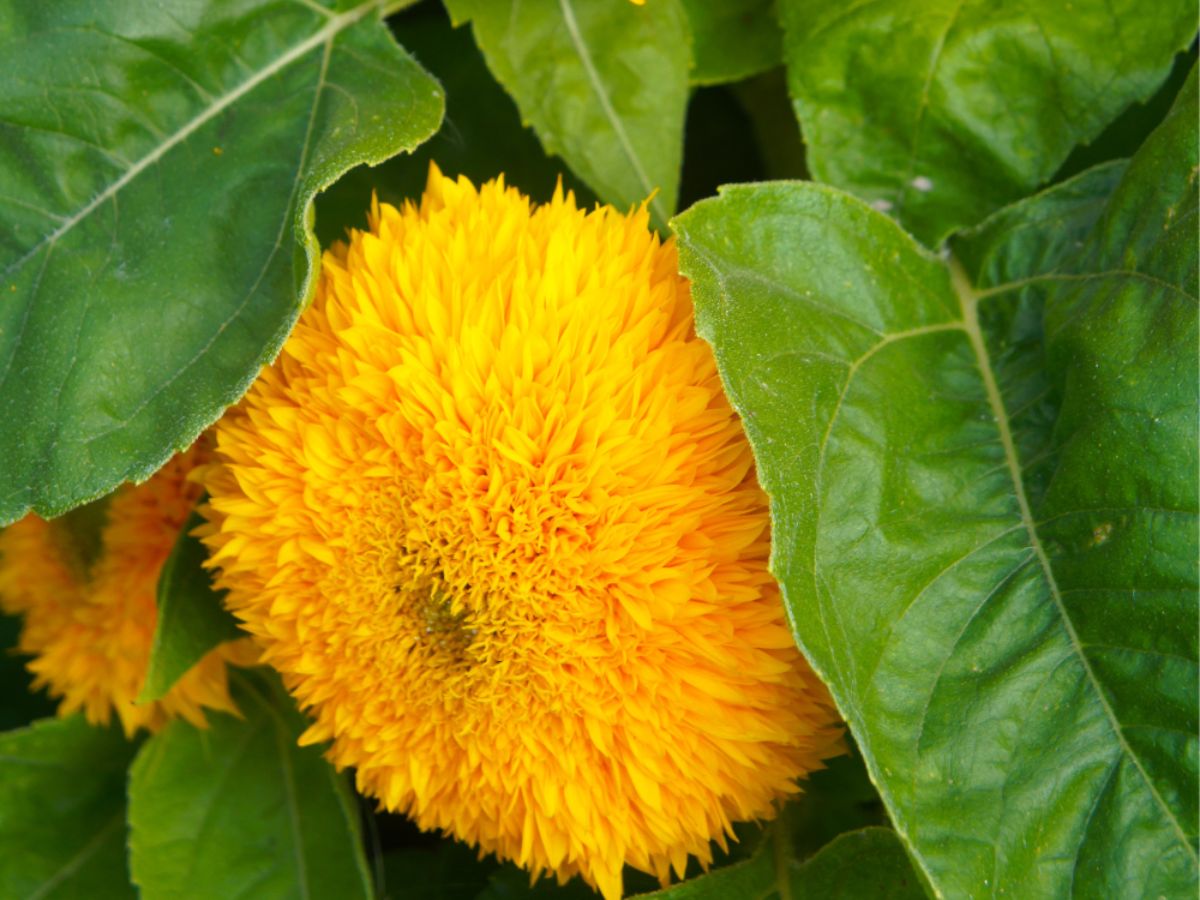
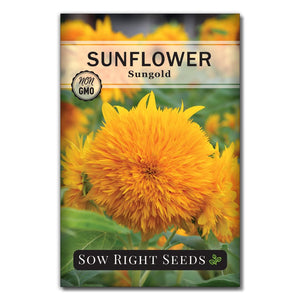
This dwarf "Teddy Bear" is a fluffy sunflower. It grows 2 to 3 feet tall and has 4" blooms. It makes an excellent cut flower with multiple flowers per stem.

Saving Sunflower Seeds
Harvesting sunflower seeds is a delicious part of growing sunflowers.
When the seeds are close to being mature, the petals covering them will begin to fall off, and the flower head will droop down instead of following the daily path of the sun across the sky. The green back of the head will start turning yellow.
At this point, you will need to start protecting the seeds from birds and other animals that enjoy the food source. You can cover the flower heads with mesh cloth or paper bags.
You will want to leave the heads on the stalk for full development of the seeds. But sometimes, you must get them inside before they freeze or to protect them from animals.
To dry them indoors, cut a foot below the head and hang them upside down to dry. Make sure they are in a well-ventilated area where mice and birds can’t get to them.

Fun places to grow a sunflower garden
- Plant sunflowers along a fence, the side of a barn, or a structure you want to hide.
- Create a border around different areas of your garden.
- Plant tall branching varieties to create a natural privacy screen around your patio.
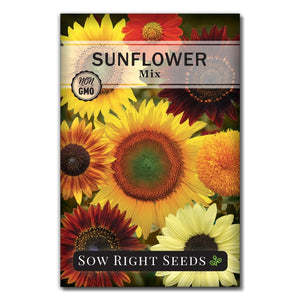
- Use our sunflower mix to plant a random combination of colors and sizes in a cottage-style garden.
- Add sunflowers to a wildflower garden to enhance biodiversity.
- Create a bird-watching station with sunflowers.

Growing Sunflowers FAQs
Can you transplant sunflowers?
Yes, you can successfully transplant sunflowers if you follow some helpful tips. Sunflowers develop a long taproot. As a result, it can quickly reach the bottom of the container and stunt the growth. But you can successfully transplant sunflowers by using biodegradable pots and transplanting when the seedlings are young.
Can sunflowers grow in pots?
Yes, sunflowers can be grown in pots. However, you will want to ensure that you choose a suitable container for the variety of sunflower. Mammoth sunflowers grow very tall with a heavy head and need a large pot. Tall varieties may even require additional support to keep them from falling over. Dwarf varieties like the Sungold Sunflower are an ideal choice of sunflowers for growing in containers.
How early can you plant sunflowers?
Sunflowers can be planted as soon as there is no longer any danger of a spring frost and the soil is at least 50º F. These are heat-loving flowers that don’t appreciate a cold snap.
How late can you plant sunflowers?
Sunflowers can be planted all summer. Depending on the variety and their days to maturity, 50 to 60 days before the first fall freeze should give them time to grow.
How do you harvest sunflowers for fresh bouquets
Sunflowers have a long vase life and make good cut flowers. They can be used in all kinds of arrangements and wreaths. For cut flower arrangements, cut the sunflowers when the petals are just starting to unfurl. Read more about drying flowers and cutting flowers in our blogs.
Sunflowers are fun to grow. Whether you are growing for seeds, cutting flowers, or just the visual appeal, we have a variety that will fit your needs.
Take a look at all the varieties we offer and find your new favorite sunflowers.


Leave a comment